
What Happens If Police Think You Lied After an Uber Accident in Tennessee?
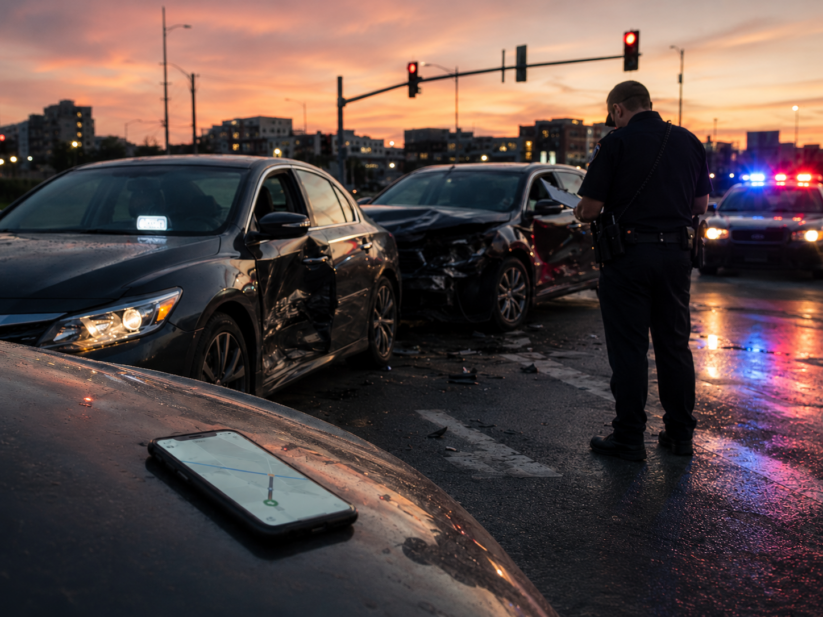
An Uber accident can become stressful fast. A passenger may be shaken. A driver may be trying to answer questions while checking on injuries, vehicle damage, app records, insurance details, and the police report. Someone may give an answer at the scene and later realize the answer was incomplete, unclear, or wrong.
The situation becomes more serious when an officer believes your statement does not match the available evidence. That evidence may include screenshots from the Uber app, phone records, subpoenaed records, records voluntarily provided by someone involved, photos from the scene, bodycam footage, 911 calls, witness statements, dashcam video, or the statements of other people involved.
Police thinking that you lied does not automatically mean you committed a crime. A mistake, poor memory, shock, pain, confusion, or secondhand information is not the same thing as knowingly giving false information. The legal risk depends on what was said, what the officer asked, what the available evidence shows, and if the State believes it can prove that the statement was knowingly false.
If police believe you lied after an Uber accident in Tennessee, the safest step is not to keep explaining the story on your own. Preserve the records connected to the ride and speak with a Tennessee criminal defense lawyer before making another statement.
Why Uber Accident Statements Can Get Extra Attention
Rideshare crashes can involve more digital evidence than a standard two-car crash. An Uber trip may leave behind app-based information showing pickup time, drop-off location, route details, driver identity, rider identity, ride receipt, messages, cancellation details, and payment records.
Those records do not always tell the full story. GPS information can be incomplete. A route may not explain why a driver stopped, slowed down, or changed lanes. A receipt may show when the ride ended without proving what happened during the crash. Still, police may compare available app records, screenshots, phone records, subpoenaed records, or records voluntarily provided by someone involved with what each person said at the scene.
For example, if a passenger says the Uber ride had not started, but the app receipt shows an active trip, police may ask more questions. If a driver says the passenger was never in the vehicle, but messages and witness statements suggest otherwise, the officer may look more closely at that answer. If one person claims the crash happened at a different location than the available route information suggests, that inconsistency may become part of the investigation.
An inconsistency is not always a lie. The criminal-defense question is whether the person knowingly gave false information about a material part of the investigation.
Being Wrong Is Different From Knowingly Lying
After a crash, people may describe events poorly. They may guess about speed. They may get the order of events wrong. They may say something based on what another person told them. They may be scared, hurt, or overwhelmed.
That kind of mistake is different from knowingly giving false information to police.
Tennessee’s false report statute, TCA § 39-16-502, creates two distinct offenses. The first, under subsection (a)(1), covers knowingly initiating a false report or statement to law enforcement about an offense or incident within the officer’s concern no intent to obstruct is required. The second, under subsection (a)(2), covers a knowingly false statement made in response to a legitimate inquiry about a material fact, but only when the person intends to obstruct or hinder the officer. Both offenses are classified as Class D felonies under Tennessee law, carrying potential imprisonment of two to four years. This is not a minor citation, it is a felony-level allegation.
That distinction matters. A person who gives inaccurate information because they are injured, panicked, confused, or relying on bad information is in a different position than someone who knowingly creates a false version of events to hide a crime, protect another person, avoid a warrant, avoid a DUI investigation, or shift blame after a crash.
Tennessee Accident Duties Still Matter
An Uber accident is still a motor vehicle accident. Tennessee law places duties on drivers involved in covered crashes.
In a property-damage crash, Tennessee law requires the driver of a vehicle involved in an accident to stop at the scene, or as close to the scene as possible, and remain until the required information duties are met. The stop must not obstruct traffic more than necessary. You can review the statute here: Tenn. Code Ann. § 55-10-102.
When a crash involves injury, death, or damage to an attended vehicle — meaning a vehicle that has a person in or nearby it at the time of impact — Tennessee law also requires the driver to provide identifying information and render reasonable assistance to an injured person when treatment appears necessary or is requested. You can review that statute here: Tenn. Code Ann. § 55-10-103.
These duties apply to drivers. A rideshare passenger may not have the same driver-based duties, but a passenger can still create legal risk by knowingly giving false information, using another person’s identity, falsely accusing someone, or interfering with an investigation.
When an Incorrect Statement Can Become a Criminal Issue
Police may become concerned when the statement goes beyond an innocent mistake and appears to change a material part of the investigation.
Examples can include saying you were not driving when evidence shows you were behind the wheel, claiming an Uber driver fled the scene when records or video show the driver remained, giving a false crash location, falsely reporting that another person assaulted you during the ride, denying that a passenger was in the vehicle when app information and witness accounts suggest otherwise, or blaming another person when the physical evidence points in a different direction.
The phrase “material fact” matters. A small mistake about an unimportant detail may not carry the same weight as a knowingly false statement about who was driving, who was injured, who left the scene, if alcohol or drugs were involved, or if a crime occurred.
If the statement was made in a required statutory accident report, Tennessee also has a separate accident-report false-information law. Under Tenn. Code Ann. § 55-10-110, a person who gives information required in certain statutory accident reports while knowing or having reason to believe the information is false commits a Class C misdemeanor. This standard is lower than the ‘knowingly false’ requirement under the general false report statute — a person does not need to have known their accident report information was wrong. If they had reason to believe it was false and provided it anyway, that alone may be enough for a charge under this section.
That does not mean every wrong statement after a crash becomes a criminal charge. The facts, the wording of the statement, the setting, and the available proof all matter.
Giving Police a False Name After an Uber Accident
A false name can create a separate issue from the accident itself.
Tennessee’s 2025 law makes it an offense to intentionally give a false or fictitious name to a law enforcement officer who has lawfully detained or arrested the person. The law also makes clear that failure or inability to produce a physical form of identification or driver’s license is not itself a violation.
Intentionally giving a false or fictitious name under this law is a Class C misdemeanor, punishable by up to 30 days in jail and a fine of up to $50.
This issue can arise after an Uber accident if a passenger gives the name of someone else on someone else’s Uber account, a driver uses another person’s identity to avoid a warrant, a person gives a false name because of a suspended license, or someone tries to hide their connection to the ride.
A false-name issue should not be confused with a simple inability to produce ID at the scene. The legal concern is intentionally giving a false or fictitious name after a lawful detention or arrest.
What If Someone Falsely Claimed to Be a Rideshare Driver?
Tennessee also has a rideshare-specific issue that may matter in unusual cases.
A 2025 Tennessee law created the offense of criminal impersonation of a transportation network company driver. This can involve false statements, fake trade dress, fake branding, a false logo, or another act falsely representing a current connection with a transportation network company. It can also involve falsely claiming to be responding to a passenger ride request.
Under HB786/SB704, effective July 1, 2025, this offense is a Class B misdemeanor, carrying up to six months in jail and a $500 fine. If the impersonation occurs during the commission of a separate felony, the charge is elevated to a Class E felony. This escalation is directly relevant in crash scenarios where another offense such as assault, DUI, or leaving the scene is alleged at the same time as the false identity claim.
This does not mean a real Uber driver commits a rideshare impersonation offense by making a poor statement after a crash. It also does not mean every disagreement about a ride account becomes an impersonation issue. This section matters when someone is falsely presenting themselves as a rideshare driver or falsely claiming that a ride request exists.
In an accident investigation, this issue may come up if someone says they were working as an Uber driver when no ride request existed, uses fake Uber signage, or tries to explain their presence at the scene through a rideshare connection that police believe is fabricated.
Other Charges Police May Look At After an Uber Accident
If police believe someone lied after an Uber crash, the suspected false statement may not be the only issue. The investigation may also involve leaving the scene, driving on a suspended or revoked license, DUI, traffic violations, false identification, criminal impersonation, vehicular assault, or vehicular homicide if the crash involved serious injury or death.
If alcohol or drugs are part of the investigation, the person may also need help with DUI defense in Tennessee. If the case began with a citation, speed issue, improper lane change, failure to report, or another roadway allegation, the case may overlap with traffic violation defense. If the accusation is a misdemeanor-level offense, the case may also connect with misdemeanor defense services.
If a rideshare crash causes a death and police suspect criminal conduct, the investigation may involve vehicular homicide defense. That is a different level of exposure than a minor traffic accident or a disputed crash report.
If the accident happened in Chattanooga, Hamilton County, or another Tennessee jurisdiction, the exact path of the case matters. How a case is handled can depend on the specific charge and local court procedures.
What Not to Do If Police Think Your Statement Was False
Do not try to fix the situation by making repeated calls to the officer without legal advice. A new statement may create more inconsistencies, even when the person is trying to help.
Do not contact the Uber driver, passenger, other driver, or witness and ask them to change their statement. Even a message that feels harmless can look like pressure or interference when police later review it.
Do not delete Uber records, call logs, text messages, photos, videos, social media posts, location history, or insurance communications. Deleting records can make the situation worse and may create a separate issue if police believe the person was trying to hide evidence.
Do not guess. If police ask for a detailed timeline and you do not remember, guessing can be dangerous. A person can say they do not know or do not remember instead of filling in missing details.
Do not assume that an insurance issue and a criminal issue are the same thing. An insurer may dispute fault, coverage, or injury claims. That does not automatically mean a crime occurred. At the same time, statements made to insurance, Uber, or another driver may later become part of the broader factual record.
Before making another statement, it may help to understand why confidentiality matters when speaking with a defense attorney. A private legal conversation is different from a recorded statement to police, an insurance adjuster, Uber, or another person involved in the crash.
What You Should Preserve After an Uber Accident
Save the Uber receipt, trip route, pickup and drop-off information, driver or rider details, in-app messages, screenshots, emails from Uber, insurance messages, medical records, photos of the vehicles, photos of the scene, witness names, repair estimates, and any police paperwork.
If you have dashcam footage, vehicle camera footage, or nearby business camera information, preserve it quickly. Some video systems overwrite footage after a short time.
Write down what you remember while it is fresh, but do not post your version online. A private timeline for your lawyer is different from a public statement that police, insurers, or another party may later read.
If you were injured, document the injury and medical care. Shock, head injury, pain, medication, or confusion can matter when reviewing why a statement was incomplete or inaccurate.
How a Defense Lawyer May Review the Case
A defense lawyer may start by asking what the officer actually asked, what you actually said, if the statement was recorded, and if the alleged false statement involved a material fact.
The defense may also review if the statement was knowingly false. That question can involve the person’s physical condition, emotional state, injuries, intoxication level, language issues, misunderstanding of the question, reliance on another person’s information, or confusion at the scene.
The lawyer may compare the police report with bodycam footage, 911 recordings, app records, photographs, vehicle damage, witness accounts, and medical evidence. In some cases, the evidence may show that the person’s statement was not false. In other cases, it may show that the statement was incomplete, unclear, or poorly phrased rather than knowingly false.
The defense may also look at whether police treated an assumption as a lie. For example, a passenger may say, “I thought we were still on the Uber trip,” because the ride had not ended on their phone. A driver may say, “I did not see the other car,” because they did not see it before impact. Those statements may be disputed, but disputed does not automatically mean criminal.
Uber Records Can Help or Hurt
Uber-related records can cut both ways. They may contradict a statement, but they may also support the defense.
A trip receipt may show that a person was a passenger, not the driver. A route map may support the location given at the scene. A message history may explain why someone believed a ride was active. A cancellation record may help explain confusion about the trip status.
For that reason, a person should not assume that app data is bad for the defense. The issue is how the records fit with the full timeline and what police believe the person knew when speaking.
When to Contact a Criminal Defense Lawyer
You should contact a lawyer quickly if an officer says your story does not match the evidence, asks you to come in for another interview, accuses you of giving a false statement, mentions a warrant, issues a citation, or asks for your phone.
You should also get legal advice if the accident involved injuries, suspected DUI, a suspended license, a false name, a claim that someone left the scene, or an accusation that you were pretending to be connected to Uber.
Early legal guidance can help protect the record before another statement makes the situation more difficult. A lawyer can help review what was said, preserve Uber and phone records, communicate with investigators when appropriate, and evaluate the criminal exposure tied to the facts.
Can Police Charge You Just Because They Think You Lied?
No. Police suspicion is not the same as proof. A charge depends on the facts, the specific statement, the evidence, and the legal theory the State believes it can prove.
A person may have a strong defense if the statement was a mistake, a misunderstanding, a reaction to shock, or based on incomplete information. A person may face greater risk if the statement was knowingly false and related to an important part of the investigation.
Should You Correct the Statement Yourself?
If police already believe you lied, do not make a new statement without legal advice. A correction may help in some situations, but it can also create new problems if it is rushed, incomplete, or inconsistent with other evidence.
A lawyer can help decide how to address inaccurate information, what records should be gathered first, and if a corrected statement should be made.
What If the Uber Driver or Passenger Lied?
If another person lied, do not confront them or pressure them to change their story. Save your records and speak with a lawyer.
False statements by another person may affect the investigation, but unsupported accusations can create new risk. The better approach is to preserve objective evidence, including Uber data, messages, photos, video, and witness information.
Speak With Davis & Hoss About a Tennessee Uber Accident Investigation
If police think you lied after an Uber accident in Tennessee, the situation may involve more than a crash report. It may involve a false-report allegation, a false-name issue, DUI concerns, a traffic offense, or another criminal accusation.
Davis & Hoss represents people facing criminal allegations in Tennessee. If you are worried about what you said after a rideshare crash, contact the firm before making another statement.
This article is for general information only. It is not legal advice and does not create an attorney-client relationship. Prior results do not guarantee a similar result.