
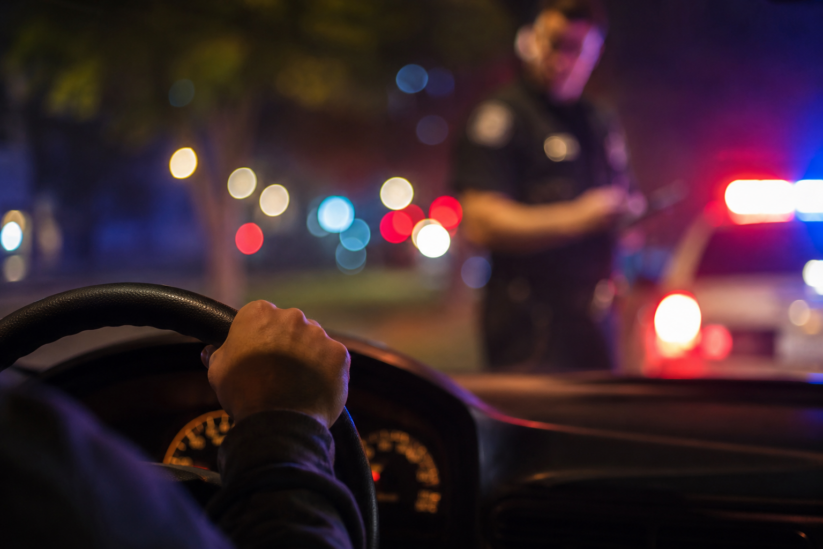
In Tennessee, a DUI investigation does not always begin with a police officer personally observing a driver. In some situations, law enforcement receives information from another motorist, a passenger, a business employee, a security officer, or another witness who believes a driver may be impaired.
Many people are surprised to learn that someone reported their driving. Others discover a report was made when police stop their vehicle, contact them later, or attempt to gather additional information after the reported incident.
If someone reports you for drunk driving, the report itself does not automatically establish that a crime occurred. Law enforcement may investigate the information provided, evaluate available evidence, and determine what additional steps, if any, are appropriate.
Understanding how these investigations work can help explain what happens after a report is made and why witness information can become an important part of a DUI investigation.
Note: Tennessee DUI laws were updated effective January 1, 2026. Changes include a longer minimum license revocation period for implied consent refusals, expanded authority for officers to assist in blood draws, and the addition of oral fluid (saliva) tests as admissible evidence. These changes may affect how a DUI investigation or prosecution proceeds.
For additional information regarding Tennessee DUI investigations and related criminal matters, visit our Driving Under the Influence (DUI) Services page.
Who Can Report Suspected Drunk Driving?
Reports of suspected impaired driving can come from different sources.
Other motorists may contact law enforcement after observing unusual vehicle operation. A driver may report concerns if they believe another person may be driving under the influence.
Passengers may also report concerns regarding a driver’s condition. Reports may come from restaurant employees, bar staff, event personnel, parking attendants, security officers, business owners, or pedestrians.
The source of the report can become relevant during an investigation. In some situations, the reporting person identifies themselves and provides contact information. In other situations, information may be provided anonymously.
The existence of a report does not determine the outcome of an investigation. It is one piece of information that law enforcement may consider while gathering additional facts.
What Information May Be Included in a Drunk Driving Report?
The quality and detail of reports can vary significantly.
Some reports contain only a basic vehicle description. Others provide more detail regarding the vehicle’s location, driving behavior, and direction of travel.
A report may include the vehicle make, model, color, license plate information, location, direction of travel, time of observation, and a description of the driving behavior.
Witnesses may report observations such as drifting between lanes, driving on the shoulder, abrupt braking, unusually slow driving, failure to maintain a lane, or near collisions.
The accuracy of this information can become important later if questions arise regarding vehicle identification or witness reliability.
What Happens After Police Receive the Report?
Once a report is received, officers may attempt to locate the vehicle described by the reporting party.
The specific response depends on the circumstances and the information available at the time.
If officers locate the vehicle, they may compare what they observe with the information provided by the witness. Officers may also communicate further with the reporting party to obtain additional details.
In some situations, officers locate the vehicle quickly. In others, the vehicle may no longer be in the reported area when law enforcement arrives.
Investigators may gather information from multiple sources, including witness statements, officer observations, video recordings, physical evidence, and other information obtained during the investigation.
Possible Timeline After a Drunk Driving Report
A DUI investigation after a citizen report may move through several stages.
A witness may contact law enforcement through 911 or a non-emergency number and report suspected impaired driving. The witness may provide a vehicle description, license plate number, location, or direction of travel.
Officers may then attempt to locate the vehicle and observe its operation. If officers locate the vehicle, they may gather information through observations, witness statements, video evidence, or other investigative methods.
Additional follow-up may occur if more evidence needs to be reviewed. The exact sequence depends on the facts of each investigation.
Can Police Stop a Vehicle Based on a Citizen Report?
This is one of the most important questions after someone learns their driving was reported.
Courts may consider information provided by witnesses when evaluating the circumstances surrounding a traffic stop. Factors can include the detail of the information provided, the reliability of the report, whether the witness identified themselves, and what officers observed during their investigation.
Under controlling federal and Tennessee law, a sufficiently detailed anonymous 911 tip reporting dangerous or impaired driving can by itself provide law enforcement with reasonable suspicion to stop a vehicle — even without the officer independently observing a traffic violation. The U.S. Supreme Court addressed this in Navarette v. California (2014), and Tennessee courts apply the same standard. Identified witness reports are generally given even greater weight.
Because courts evaluate the totality of the circumstances in each case, the specific facts including the detail of the tip, timing, and what officers observe — matter significantly.
A citizen report may become one component of an investigation rather than the sole basis for any action taken by law enforcement.
How Officers May Verify Information Provided by a Witness
Witness reports are not automatically accepted without further evaluation.
Investigators may compare the witness’s information with other available evidence. For example, officers may compare a witness’s description of a vehicle with the vehicle they locate. Investigators may review video footage, compare timelines, evaluate witness statements, and document their own observations.
If multiple witnesses provide information, investigators may compare those accounts for consistency.
Questions may also arise regarding visibility conditions, distance, weather conditions, lighting conditions, and the opportunity a witness had to observe the reported events.
The process of verifying information can become important later if the investigation leads to criminal allegations.
Can Police Come to Your Home After a Drunk Driving Report?
One of the major questions involving citizen-reported DUI investigations is whether law enforcement can contact a driver after the driver has already returned home.
In some situations, officers may continue an investigation after locating a vehicle owner or identifying a driver.
For example, a witness may provide a license plate number that allows investigators to identify a vehicle owner. Officers may then attempt to gather additional information regarding the reported incident.
Cases involving contact at a residence can raise unique factual issues.
An important constitutional boundary applies in these situations. While officers may approach a home and knock to ask questions, they generally cannot enter a residence without the occupant’s consent, a warrant, or true exigent circumstances. The U.S. Supreme Court confirmed in Caniglia v. Strom (2021) that a general community-caretaking rationale does not justify warrantless home entry. Tennessee courts apply the same principle. A driver who has returned home is in a legally different position than one still on the road.
Investigators may seek to determine when the individual arrived home, if alcohol was consumed before driving, and what events occurred after driving ended.
Timing can become an important issue in these investigations.
Witness statements, surveillance footage, receipts, electronic records, and other evidence may be reviewed when reconstructing the timeline of events.
Questions regarding timing may become particularly important when significant time passes between the reported driving and the officer’s contact with the driver.
How a case is handled can depend on the specific charge and local court procedures.
What Evidence May Exist Before Police Speak to a Driver?
Many people assume an investigation begins when law enforcement makes contact with a driver. In reality, evidence may already exist before any conversation occurs.
Depending on the circumstances, investigators may have access to witness statements, 911 recordings, dispatch records, dash camera footage, surveillance video, body camera recordings, digital timestamps, photographs, or physical observations documented by officers.
The existence and quality of evidence vary from case to case.
The reliability of that evidence may later become an issue during court proceedings.
Witness statements are only one part of a DUI investigation. Law enforcement may also review officer observations, video recordings, testing results, and other evidence when evaluating a case. For more information about DUI-related criminal allegations, visit our Tennessee DUI information center maintained by a Tennessee DUI lawyer.
What If the Person Reporting You Was Mistaken?
Mistaken reports can occur for many reasons.
Vehicle identification is not always perfect, particularly at night, during adverse weather conditions, or in areas with heavy traffic.
A witness may accidentally record an incorrect license plate number or mistakenly identify the wrong vehicle.
Driving behavior can also have explanations unrelated to alcohol or drug impairment.
Medical conditions, fatigue, distractions, roadway hazards, weather conditions, and mechanical issues may affect vehicle operation.
The existence of unusual driving behavior does not automatically establish impairment.
Investigations often involve reviewing evidence from multiple sources rather than relying exclusively on a single observation.
Why Witness Credibility Matters in DUI Investigations
Witness information can become an important part of an investigation, but credibility is a significant issue.
Credibility questions may involve lighting conditions, weather conditions, distance from the vehicle, duration of observation, consistency of statements, and accuracy of vehicle identification.
Different witnesses may observe the same event differently.
In some cases, witness testimony may be consistent with other evidence. In other situations, inconsistencies may arise that require further examination.
Because witness reports can play a significant role in an investigation, credibility can become an important consideration.
How 911 Calls May Be Reviewed in DUI Cases
When a witness contacts emergency dispatch, a recording of the call may be created or preserved.
Investigators may review the recording as part of the investigation.
The recording may provide information regarding what the witness observed, when the observation occurred, the vehicle description provided, the witness’s location, and the witness’s level of certainty.
Dispatch records may also contain timestamps and other information that help establish a timeline.
The significance of any recording depends on the facts of the individual case and the other evidence available.
What to Avoid After Learning You Were Reported
Learning that someone reported your driving can be stressful.
In that situation, it may be important not to make assumptions regarding the status of an investigation.
People sometimes assume that no investigation exists because they were not immediately contacted by law enforcement. Others attempt to contact witnesses or discuss the situation publicly — either of which can create additional legal complications. Reaching out to a person who reported you may be viewed as witness tampering, and statements made on social media or to others can potentially be reviewed by investigators.
Every situation is different.
If questions arise regarding an investigation, understanding the facts and circumstances involved may be more useful than speculation about what may happen next.
What Should You Do If You Learn You Are Being Investigated?
The appropriate response depends on the facts of the situation.
Investigations vary significantly from case to case.
Understanding the nature of the investigation, the available evidence, and the timeline of events can be important considerations when evaluating the circumstances.
Questions related to a DUI investigation may involve Tennessee DUI laws, witness evidence, testing procedures, and the criminal court process. If you are in Chattanooga or anywhere in Hamilton County and have learned you may be under investigation, additional information is available through our Tennessee DUI services page, or you can contact our office directly.
Frequently Asked Questions
Can someone anonymously report me for drunk driving?
Yes. Law enforcement may receive anonymous reports regarding suspected impaired driving. The significance of the report depends on the information provided and the circumstances of the investigation.
Does a report automatically mean I will be arrested?
No. A report is not the same as proof. Law enforcement may evaluate witness information together with other evidence gathered during the investigation.
Can police come to my home after a DUI report?
In some situations, officers may continue an investigation after identifying a driver or vehicle owner. The circumstances vary from case to case.
What if the witness reported the wrong vehicle?
Vehicle misidentification can occur. Vehicle descriptions, license plate information, witness statements, and other evidence may be reviewed during the investigation.
Can a 911 recording be used in a DUI case?
A 911 recording may become part of the evidence reviewed during a criminal case, depending on the circumstances.
Can witness testimony be used in court?
Witness testimony may be considered as part of a criminal case, along with other evidence gathered during the investigation.
Why does timing matter in a DUI investigation?
Timing may affect witness observations, video evidence, officer observations, and other facts that investigators review when examining a reported incident.
If you have learned that someone reported your driving in Tennessee, or if you believe a DUI investigation may have begun, speaking with a Chattanooga DUI attorney early in the process can be important. The attorneys at Davis & Hoss, PC have represented clients in DUI matters throughout Hamilton County and across Tennessee for over 35 years. Contact our office for a free consultation at (423) 266-0605 or visit our Tennessee DUI services page.