
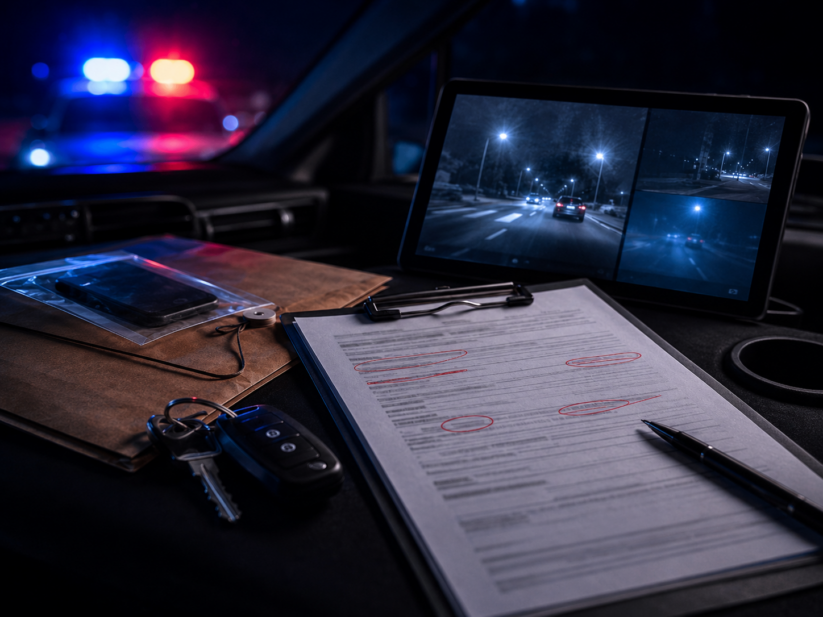
A wrong DUI police report in Tennessee can raise serious questions about the case against you. Maybe the officer wrote the wrong time, misstated your driving, described field sobriety tests incorrectly, left out important facts, or included details that do not match bodycam or dashcam footage.
A mistake in the police report does not automatically dismiss a DUI charge. The real issue is what the mistake affects. A typo may have little impact. A mistake about the stop, arrest, testing, statements, video, or officer observations may be much more serious.
If you are facing a DUI charge in Chattanooga or elsewhere in Tennessee, a DUI defense attorney in Chattanooga can compare the police report with the video, testing records, witness information, and court filings to see how the error may affect the defense.
Does a Wrong DUI Police Report Automatically Dismiss the Case?
No. A wrong police report does not automatically dismiss a Tennessee DUI case.
Tennessee DUI charges are governed by Tenn. Code Ann. § 55-10-401.
The police report is not the whole case. The prosecution may also rely on officer testimony, bodycam footage, dashcam footage, dispatch logs, witness statements, breath test records, blood test records, lab reports, medical records, or other evidence.
That does not mean report errors should be ignored. A DUI police report is the officer’s written version of what happened. If the report is inaccurate on an important point, the defense may be able to use that mistake to challenge the reliability of the officer’s account.
The key question is not just, “Is the report wrong?” The stronger question is, “Does the wrong detail affect something the prosecution needs to prove?”
Why Police Report Errors Can Matter in a Tennessee DUI Case
A Tennessee DUI case may involve impairment, driving or physical control, the officer’s observations, the reason for the stop, probable cause, and any testing evidence. A report error may matter when it affects one of those issues.
For example, a mistake about the driver’s license number may not change the case. A mistake about why the officer stopped the vehicle may be more serious. If the officer wrote that the car crossed the center line, but dashcam footage shows the car staying in its lane, that could affect the legal basis for the stop.
The same is true for alleged signs of impairment. If the report says the driver was slurring, stumbling, or unable to follow instructions, video may confirm that description, weaken it, or show missing context.
Police report errors are strongest when they conflict with independent evidence.
Police Report Error vs. Evidence Error
A police report error is a mistake in the officer’s written description. An evidence error is a problem with the proof the state may use.
For example, the police report may say the driver failed field sobriety tests. That is a report statement. The evidence may include bodycam footage showing how the tests were explained, where they were performed, how the driver responded, and if the officer left out details about lighting, road surface, weather, footwear, or medical issues.
The report may say the driver admitted drinking. The evidence may include audio showing the exact question, the exact answer, and the context around the statement.
The report may say the officer smelled alcohol, observed red eyes, or noticed poor balance. The evidence may include video, witness statements, medical explanations, allergy issues, fatigue, or other facts.
A defense lawyer does not review the report in isolation. The report should be tested against everything else in the case.
Examples of DUI Police Report Errors That May Matter
Some DUI report mistakes deserve close review because they may affect the stop, arrest, testing, or officer credibility.
A report may list the wrong reason for the traffic stop. This can matter if the officer claims the driver committed a traffic violation that does not appear on video.
A report may give the wrong timeline. DUI timelines can involve the time of driving, the time of the stop, the time of field sobriety testing, the time of arrest, the time of a breath test, or the time of a blood draw. A timeline error may matter if it affects the state’s proof.
A report may misstate what the driver said. If the officer wrote that the driver admitted drinking or using drugs, audio or video should be reviewed to see what was actually said.
A report may describe field sobriety tests incorrectly. This can matter if the officer’s written description does not match the video or leaves out physical limitations, road conditions, or unclear instructions.
A report may claim the driver showed signs of impairment that are not visible on video. The defense may compare the report with bodycam footage, booking footage, witness statements, and medical information.
A report may leave out facts that help explain what happened. Missing details can be important when the report presents a one-sided version of the stop.
Report Mistakes That May Affect the Traffic Stop
A DUI case may begin with a traffic stop. The officer may write that the driver was speeding, weaving, crossing lane lines, failing to signal, driving too slowly, drifting, or committing another traffic offense.
If the report gets the stop wrong, the defense may examine dashcam footage, bodycam footage, GPS records, dispatch notes, citation details, and any witness information. The goal is to determine if the officer had a lawful basis for the stop and if the written report matches the recorded evidence.
A wrong stop description can matter because the stop is the starting point for the DUI investigation. If the reason for the stop is weak or contradicted by video, that issue may affect the defense strategy.
It is also worth noting that Tennessee DUI law does not require the vehicle to be moving — a driver can be charged based on physical control of a stationary vehicle — so a report error about whether the car was moving may carry different weight than an error about who was driving.
When the Report Does Not Match Bodycam or Dashcam Footage
Bodycam and dashcam footage can be very important in DUI cases because video may show what happened before, during, and after the arrest.
A police report may describe a driver as unsteady, confused, aggressive, slurring, or unable to follow instructions. Video may support that description, contradict it, or show a more complete picture.
Video may show how the officer approached the vehicle, what the driver actually said, how field sobriety instructions were given, where the tests were performed, how the driver moved, and how long the stop lasted.
A written report is prepared after the event. Video may capture the event as it happened. When the two do not match, the difference may help with cross-examination, negotiations, motions, or trial strategy.
A video conflict does not automatically end the case. It gives the defense something specific to evaluate.
Field Sobriety Test Details That May Be Written Incorrectly
Field sobriety testing is one area where report details can become important. The officer may write that the driver failed the walk-and-turn test, one-leg stand test, or another roadside exercise. The report may not explain the full conditions.
The defense may review where the test happened, how the instructions were given, if the driver had medical or balance issues, what shoes the driver wore, what the lighting was like, and if traffic or road conditions affected the test.
A report that simply says the driver “failed” field sobriety tests may not tell the full story. For more background on these issues, Davis Hoss has a related page on field sobriety tests in Tennessee.
Breath, Blood, Oral Fluid, and Refusal Details
Testing details in a DUI report should also be reviewed carefully. A Tennessee DUI investigation may involve breath testing, blood testing, oral fluid testing, refusal issues, consent questions, search warrants, or lab records.
If the police report gets the testing sequence wrong, the defense may need to review the breath test records, blood draw paperwork, lab records, chain-of-custody documents, warrant paperwork, implied consent forms, and any video showing the testing request.
Tennessee DUI testing law has changed in recent years, including changes involving refusal issues and oral fluid testing. Because of that, a DUI report should be reviewed under the law in effect at the time of the stop.
As of 2025 and 2026, those changes include new legal authority for roadside oral fluid (saliva) testing and a longer license suspension period for a first-time test refusal.
This section should stay focused on police report accuracy. For a deeper discussion of chemical testing, the article should link readers to Davis Hoss’s page on BAC testing in Tennessee DUI cases.
What If the Officer Misstates What You Said?
Many DUI police reports include statements the officer says the driver made. These may involve drinking, drug use, where the driver was coming from, where the driver was going, when the driver last ate, or when the driver last consumed alcohol.
If the report misquotes you or leaves out context, that can matter. The defense should compare the report with bodycam audio, dashcam audio, booking video, and any other available recording.
A short answer during a stressful roadside stop can look different when it is written into a report. A driver may answer a narrow question, speak unclearly, correct themselves, or misunderstand what the officer asked. The video or audio may show details the report does not include.
A person charged with DUI should not contact the officer to argue about the report. The safer step is to write down a private timeline and speak with a defense lawyer.
Can an Officer Add to a DUI Police Report Later?
An officer may prepare a supplemental report or add information later. A later report is not automatically improper. At the same time, changes or additions may raise questions.
The defense may ask when the original report was written, when the supplemental report was added, what changed, why the change was made, and if the new details appeared after video, lab results, witness statements, or court filings were reviewed.
Late-added details may matter if they fill gaps in the original report, change the reason for the stop, add alleged statements, or strengthen the claimed basis for arrest.
How a Defense Lawyer Reviews a Wrong DUI Police Report
A DUI police report should be reviewed line by line. The defense may compare it with bodycam footage, dashcam footage, dispatch logs, citation details, booking records, breath test records, blood test records, lab records, implied consent paperwork, warrant documents, and witness statements.
The goal is not to argue every small mistake. The goal is to find errors that affect proof.
A defense lawyer may look for contradictions about driving behavior, timeline problems, missing observations, unsupported impairment claims, field sobriety test issues, testing procedure concerns, and differences between the report and video.
If the evidence shows a legal problem with the stop, detention, arrest, testing request, warrant, or search, the defense may consider whether a motion to suppress is appropriate. If the mistake affects credibility, it may help during cross-examination. If the mistake affects testing or alleged statements, it may shape negotiations or trial strategy.
For readers who want more information about proof issues, visit the page on challenging DUI evidence.
What Should You Do If the DUI Police Report Is Wrong?
If you believe the DUI police report is wrong, do not ignore it. Also, do not try to fix it by calling the officer, contacting witnesses on your own, or posting about the case online.
Save a copy of the police report, citation, bond paperwork, court notice, and any license paperwork. Write down a private timeline while your memory is fresh. Include where you were before the stop, what you ate or drank, any medical conditions, what the officer said, what you said, what tests were performed, and what looked different from the report.
Preserve phone location data, rideshare records, receipts, photos, videos, text messages, and names of potential witnesses. These details may help your attorney compare the report against independent evidence.
Then speak with a DUI defense lawyer before making any statement about the report. The issue may be simple, or it may affect a major part of the case.
Fighting a DUI in Chattanooga or Hamilton County
A DUI case in Chattanooga may involve different law enforcement agencies depending on the facts of the stop or arrest. The defense should focus on the evidence: the stop, the officer’s observations, the report, the video, the testing records, the court filings, and the proof the state intends to use.
How a case is handled can depend on the specific charge and local court procedures.
Because of that, this article does not assume that every DUI case follows the same path. The best approach is to review the exact charge, the arrest paperwork, and the available evidence.
FAQ: Wrong DUI Police Report in a Tennessee DUI Case
Can a DUI be dismissed because the police report is wrong?
A DUI charge is not automatically dismissed because the police report contains a mistake. The mistake matters more if it affects the stop, arrest, probable cause, testing, alleged statements, or officer credibility.
Can bodycam footage contradict a DUI police report?
Yes. Bodycam or dashcam footage may show that a report is incomplete, inaccurate, or missing context. The legal impact depends on what the video shows and how it affects the DUI charge.
What if the officer wrote the wrong reason for the DUI stop?
A wrong reason for the stop may be important. The defense may compare the report with dashcam footage, dispatch notes, citation details, and other evidence to review the legal basis for the stop.
Can field sobriety test mistakes help fight a DUI?
They may. Field sobriety test mistakes may matter if the officer gave unclear instructions, used poor testing conditions, ignored physical limitations, or described the driver’s performance inaccurately.
Should I contact the police if my DUI report is wrong?
A person charged with DUI should speak with a defense lawyer before contacting law enforcement about the report. Direct contact may create new statements or other complications.
What should I save if the police report has incorrect details?
Save the police report, citation, court paperwork, license paperwork, photos, videos, receipts, rideshare records, phone location data, text messages, and names of potential witnesses.
Talk to a Chattanooga DUI Defense Lawyer
A wrong police report can be frustrating, but the strongest defense comes from comparing the report against the full record. Video, testing records, witness statements, dispatch logs, and the officer’s later testimony may all matter.
Davis Hoss reviews DUI cases for factual errors, testing issues, field sobriety problems, probable cause questions, and evidence conflicts. If your DUI police report contains incorrect details, contact Davis Hoss to discuss the facts of your case.
This article is for general information only and is not legal advice. The outcome of a DUI case depends on the facts, evidence, charge, and court procedure.