
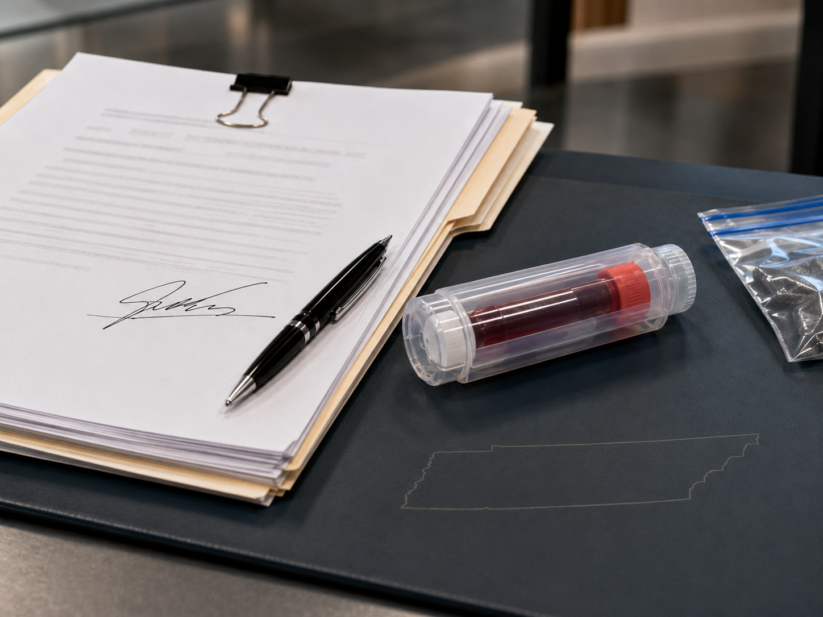
If you refuse a chemical test during a Tennessee DUI investigation, that refusal does not stop law enforcement from asking a judge or magistrate for a warrant authorizing a blood draw. A DUI blood-draw warrant in Tennessee still must be supported by probable cause and must comply with constitutional and Tennessee warrant rules.
That distinction matters. Refusing a test can create a separate implied-consent issue, but refusal does not give police unlimited authority to take blood without a valid legal basis. Tennessee law recognizes a search warrant as one basis for blood testing, and it also recognizes exigent circumstances as a separate warrant exception in limited situations.
After a DUI arrest or qualifying DUI investigation, Tennessee law may involve breath, blood, or oral-fluid testing, but this article focuses on what happens when police seek a blood draw after a refusal.
Refusal Does Not End the DUI Blood-Test Question
A driver may think refusing a DUI test ends the chemical-testing part of the case. It does not. After a refusal, an officer may prepare a warrant application and ask a judicial officer to authorize a blood draw.
The refusal itself does not replace the warrant requirement. The officer still has to present facts supporting probable cause. Those facts may include driving behavior, an accident, odor of alcohol, field sobriety observations, statements, drug indicators, open containers, admissions, or other facts tied to suspected impairment.
If a judge signs the warrant, police may then direct a qualified medical provider to draw blood. A warrant is not the same thing as consent. It is judicial authorization based on the facts presented to the court.
For a broader explanation of refusal warnings and license consequences, see our page on Tennessee’s implied consent law.
What Is a Blood Warrant After DUI Refusal?
A blood warrant after DUI refusal is a court order authorizing law enforcement to obtain a blood sample for alcohol or drug testing. In a Tennessee DUI blood test warrant application, the officer must provide sworn facts showing probable cause to believe evidence of DUI will be found in the person’s blood.
The judge does not need the driver’s agreement to issue the warrant. The warrant process is not a second request for consent. It is a request for court approval.
That is why “I refused” and “they got a warrant anyway” can both be true. Refusal may affect the implied-consent side of the case, while the warrant may allow the State to pursue blood-test evidence in the DUI prosecution.
Can Police Force a Blood Draw in Tennessee?
A forced blood draw DUI Tennessee case raises serious constitutional questions, but the word “forced” needs careful treatment. A blood draw is a search under the Fourth Amendment. The U.S. Supreme Court has made clear that warrantless blood testing in drunk-driving investigations is not automatically justified by the natural loss of alcohol in the bloodstream. Exigency must be evaluated case by case.
The Supreme Court has also distinguished breath testing from blood testing. Breath tests and blood tests are not treated the same way because blood testing is more invasive and gives the government a biological sample.
In Tennessee, a blood draw may be authorized by a valid warrant or by a legally recognized exception. Tennessee law also addresses blood draws performed by qualified practitioners after a warrant or court order, including circumstances involving reasonable force. Even then, the draw and the warrant process may still be reviewed by a court.
A driver should not physically resist a warrant-authorized blood draw. Physical resistance can create additional risks. The better legal fight is through counsel, motions, warrant review, and challenges to the blood evidence.
What Must the Officer Show to Get a Tennessee DUI Blood Test Warrant?
An officer seeking a Tennessee DUI blood test warrant must give the judge facts, not just conclusions. A valid application should connect the traffic stop, arrest, or accident investigation to probable cause for DUI.
A warrant may be vulnerable if the affidavit relies on vague claims, leaves out key facts, contains inaccuracies, or fails to explain why the officer believed alcohol or drugs were involved. It may also be challenged if the officer lacked a lawful basis for the stop, detention, or arrest before seeking the warrant.
The question is not simply if a warrant exists. The defense should examine how the warrant was requested, what facts were included, what facts were left out, who issued it, where it authorized the draw, and if officers stayed within the warrant’s limits.
A Warrant Has Limits
A signed warrant is powerful, but it is not a blank check. Tennessee courts can review the way a DUI blood warrant was obtained and carried out.
For example, Tennessee appellate litigation has addressed a case where a defendant refused a blood draw, the officer obtained a warrant, and later issues arose over the location and execution of the blood draw. That kind of dispute shows why the details matter.
DUI blood evidence depends on more than the test result. The State may have to defend the warrant, the draw location, the medical provider’s authority, the timing, chain of custody, lab testing, and compliance with applicable rules.
For more on how blood and breath results are used and challenged, read our page on BAC testing in Tennessee DUI cases.
What If Police Do Not Get a Warrant?
A warrant is not the only issue in every DUI blood case. Tennessee law also recognizes exigent circumstances as a possible basis for a warrantless blood draw. But exigency is not automatic just because alcohol or drugs may dissipate over time.
Courts look at the facts. Relevant issues may include if officers tried to get a warrant, if a judge was reachable, if electronic warrant procedures were available, if officers were dealing with an accident scene or medical emergency, how many officers were present, and if delay created a real risk of losing evidence.
That is why a warrantless blood draw should be reviewed closely. The State may argue exigency. The defense may argue that officers had time and means to seek a warrant.
Does Refusing a DUI Blood Test Help or Hurt the Case?
If you refuse a DUI blood test in Tennessee, the refusal may create a separate implied-consent issue, including possible license consequences. Because Tennessee’s refusal penalties changed in 2026, those consequences should be reviewed under the law in effect on the date of the arrest.
At the same time, refusal does not guarantee that the State will be left without chemical evidence. Officers may seek a blood warrant after DUI refusal. If the warrant is granted and the sample is admitted, the case may involve both the refusal issue and the blood-test result.
That does not mean the blood evidence is automatically valid. A defense lawyer may challenge the stop, arrest, warrant affidavit, warrant execution, blood draw, lab testing, reporting, and interpretation of the result.
How a case is handled can depend on the specific charge and local court procedures.
Common Defense Issues in a DUI Blood-Draw Warrant Case
A DUI blood-draw warrant case may raise several defense issues. The first is probable cause. If the officer did not have enough facts to support the warrant, the defense may seek suppression of the blood result.
The second is the accuracy of the warrant application. If the affidavit contains misleading statements or leaves out important facts, the defense may ask the court to review if the judge had a fair basis to issue the warrant.
The third is execution. A warrant may specify where the blood draw can occur, who may draw the blood, and what evidence may be seized. If officers go beyond the warrant, the blood evidence may be challenged.
The fourth is testing reliability. Even if the blood draw was lawful, the lab result still has to be reliable and tied to the defendant through a proper chain of custody.
The fifth is timing. Blood is drawn after the driving event. Depending on the delay, the State may try to use toxicology evidence to connect the result back to the time of driving. That analysis may be disputed.
What Should You Do After a Blood Draw in a Tennessee DUI Case?
If police obtained blood after a DUI refusal, do not assume the evidence ends the case. The warrant, the refusal, and the blood result all need separate review.
Write down what happened as soon as you can. Include when the stop occurred, what the officer said, if you were read implied-consent warnings, if you refused breath or blood testing, if a judge was mentioned, where the blood draw happened, who drew the blood, and if you were given any paperwork.
Then speak with a DUI defense lawyer before making decisions about court, license consequences, or plea discussions. Blood-test cases can involve legal and scientific issues that are not obvious from the citation alone.
Davis & Hoss defends DUI cases in Tennessee, including cases involving refusal, blood warrants, and BAC evidence. If you are facing charges after a DUI stop or blood draw, contact our Tennessee DUI defense team to discuss your next steps.
FAQs About DUI Blood-Draw Warrants in Tennessee
Can police get a blood warrant after I refuse a DUI test in Tennessee?
Yes. A refusal does not prevent police from asking a judge or magistrate for a warrant. The officer still must present facts supporting probable cause.
Does a DUI refusal mean police can take my blood without a warrant?
No. Refusal alone does not create unlimited authority for a blood draw. Police need a valid legal basis, such as a search warrant, express consent, or a recognized warrant exception.
Can I fight a Tennessee DUI blood test warrant?
Yes. Possible challenges may involve probable cause, the warrant affidavit, the issuing authority, the scope of the warrant, the place of execution, the blood draw procedure, chain of custody, and lab testing.
Is a forced blood draw legal in Tennessee DUI cases?
A blood draw may be authorized by a valid warrant or by a legally recognized exception. Even then, the facts and procedure matter. A forced blood draw DUI Tennessee case should be reviewed carefully for constitutional and statutory issues.
If the blood test shows a BAC over the limit, is the case over?
No. A BAC result is important evidence, but it can still be challenged. The defense may examine the legality of the stop, arrest, warrant, draw, lab process, and interpretation of the result.