
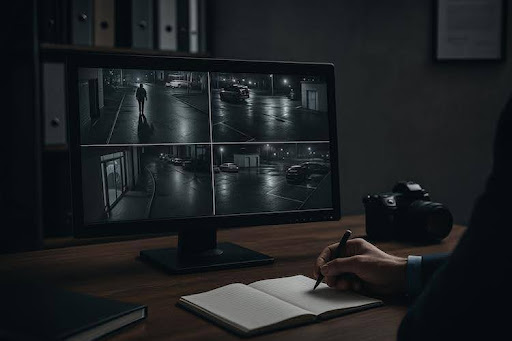
Video evidence is one of the most important tools in modern criminal defense. This is especially true in places like Red Bank, where security cameras are widely used by small businesses, homeowners, and apartment complexes. A short piece of footage can show where someone was, what really happened during a chaotic moment, or even whether the accused person was present at all.
But for video to help your case, it must be preserved early, before it disappears.
This article explains why early video preservation matters in Red Bank criminal cases, how Tennessee law treats video evidence, and what someone should do immediately after an arrest or accusation.
Video Is Often the Most Objective Evidence – But It Disappears Quickly
Many stores, restaurants, residences, and apartment buildings in Red Bank use security cameras designed for short-term monitoring, not long-term storage. These systems often erase footage automatically:
- Some overwrite themselves every 24 to 72 hours.
- Some keep recordings for one to two weeks.
- Very few keep video longer than 30 days unless someone requests preservation.
If a recording is not saved promptly, it’s gone forever, along with the chance to prove what really happened.
A simple timestamped clip showing you were walking away, inside a store, or not near the alleged incident can completely reshape a case. Without it, cases often depend on witness accounts, secondhand information, or incomplete recollections.
Tennessee Law Allows Video as Evidence
Video footage can be used in Tennessee criminal cases if it meets the legal standards of authenticity, reliability, and proper chain of custody.
To be admissible, the defense must show:
- The video is genuine.
- It accurately reflects what it claims to show.
- It has not been edited, altered, or degraded.
- The chain of custody has been maintained.
Courts tend to trust video more than human recollection because it is objective. But this only matters if the footage is preserved before it is erased.
Probable Cause Doesn’t Always Mean Accuracy
Many people believe the police must be certain before making an arrest. In Tennessee, arrests are often based on probable cause, not certainty.
Probable cause often comes from very limited information at the scene:
- Someone points at the wrong person.
- A witness mistakenly identifies two similar-looking individuals.
- A chaotic situation leads officers to draw quick conclusions.
- Bystanders provide incomplete or inaccurate accounts.
Video can immediately clarify these mistakes, but only if preserved before it’s deleted.
Private Video Is Often More Valuable Than Police Video
Police body-cam and dash-cam footage are important, but in many Red Bank cases, private surveillance video is even more helpful:
- Store security cameras
- Parking lot cameras
- Home doorbell cameras (Ring, Nest, etc.)
- Apartment complex systems
- Cameras on nearby buildings
- Cameras overlooking public streets or lots
Tennessee defense lawyers can request these recordings through:
- Preservation letters
- Subpoenas
- Public-record requests (when applicable)
Taking action early often determines whether the footage is available.
Waiting for Discovery Is a Common and Costly Mistake
Many defendants think discovery will automatically locate relevant video. This is not always true. Delays create serious risks:
- Footage may be overwritten before police request it.
- Private companies may not review their footage unless asked.
- Body-cam views may not capture the full scene.
- Metadata can be lost if the original file is not saved correctly.
Discovery cannot retrieve footage once it’s deleted. Early involvement from a lawyer is usually what determines whether video survives.
Lost Video Creates Problems – But Courts May Allow Remedies
When important footage is missing, the defense may raise a spoliation of evidence argument. Courts can impose remedies if a party failed to preserve relevant evidence.
You can review public-record request rules under the Tennessee Public Records Act.
However, to succeed with a spoliation claim, the defense must show:
- The video likely contained relevant information.
- It was erased or overwritten.
- The loss harmed the defense’s ability to challenge the allegations.
It is far easier to preserve footage early than to argue over its loss later.
What To Do Immediately After Arrest or Accusation
If you believe video can help your case, take these steps right away:
- Tell your lawyer immediately about all potential camera locations.
- Have preservation letters sent quickly to stores, homeowners, or property managers.
- Do not attempt to download or alter footage yourself.
- Identify every angle—front entrance, parking lot, side alley, street view, neighboring buildings.
- Note the times you were at or near the location.
Acting quickly significantly increases the chances of saving helpful footage.
Common Red Bank Situations Where Video Helps Cases
Mistaken Identity
Video may show the wrong person was identified, or that the accused wasn’t near the scene.
Alleged Fights or Disturbances
Security footage often shows events before, during, and after an incident, clarifying who was involved.
Traffic-Related Accusations
Video can show whether:
- A car was present
- A turn or stop was made
- The accused was the driver
Witness Conflicts
If someone forgets or misremembers details, video exposes inconsistencies.
False Accusations
Recordings often contradict emotional or biased statements.
In many cases, video becomes the most reliable source of truth.
Why Courts Trust Video – When Properly Preserved
Courts rely on video because it:
- Provides accurate timestamps
- Shows the scene clearly
- Captures events in real time
- Is not affected by stress or memory issues
However, courts require strict authenticity and chain-of-custody standards.
If footage is altered, stored incorrectly, or missing metadata, it may be excluded even if it supports the defense.
This is why proper preservation procedures matter.
If your case involves a misunderstanding or a situation where video may help clarify what happened, you can read more about how these matters are handled on the firm’s Red Bank Criminal Defense Lawyers page.
To understand why timing matters in Tennessee criminal cases, explore the firm’s guide on the Importance of Early Legal Intervention.
FAQ: Early Video Preservation in Red Bank Cases
1. Can video recordings from a business security camera system help my case?
Yes. Video recordings from security camera systems or surveillance cameras can be used in a criminal case if they are clear, relevant, and properly authenticated by your criminal defense lawyers.
2. How soon should my attorney try to preserve video surveillance after an arrest?
As early as possible. Most surveillance cameras overwrite footage quickly, and parking lot security camera systems may keep recordings only a few days. Acting early gives your criminal defense attorneys the best chance to save the evidence.
3. What if the video recordings were deleted before anyone could save them?
Your lawyer may raise concerns about lost evidence, especially if the missing video recordings could have helped your defense. Courts—including guidance influenced by Supreme Court standards on due process—review whether the loss harmed your ability to defend the criminal case.
4. Do police always collect video surveillance from nearby cameras?
No. Police do not automatically gather footage from every security camera system near an incident. That is why many people rely on their law firm or attorney to request and preserve video surveillance immediately.
5. Which cameras offer the most useful evidence in a criminal case?
Footage from different angles can help, but cameras offer different advantages. Storefront surveillance, parking lot security camera footage, home doorbell cameras, and business security systems often give the clearest timeline for your criminal defense lawyers to work with.
6. Will courts accept video recordings without any issues?
Only if the footage is authentic and the chain of custody is solid. Courts will review whether the video recordings from surveillance cameras were handled correctly and whether they accurately reflect what happened during the criminal case.
7. What if a video clearly proves I wasn’t involved?
If the footage from security camera systems is genuine and admissible, your criminal defense attorneys can present it to show you were not connected to the incident. In strong cases, this may lead to charges being dropped or reduced.